 Mason Works Editorial
Written by: Jeel Ali

Ads By Dhivehi Insurance Company
Hiyaa gave many a key but raised bigger questions about affordability, design, and the cost of getting housing wrong.
Social housing, by definition, is not about charity; it is about structure and policy. Across the world, it exists to provide affordable and stable homes for those excluded from the private market. In the Maldives, this idea has taken different forms over the decades, from early flats built with foreign aid in the 1990s to a series of state-led pledges and partial deliveries to the launch of a dedicated housing corporation. But nowhere has the ambition been more visible or more debated than in the Hiyaa project, a bold attempt to scale public housing in a country where land is scarce, cities are vertical, and the demand for a place to call home continues to rise.
It is a project that did not just promise homes; it reshaped the skyline, influenced national policy, and stirred public debate about what it meant to build for the people.
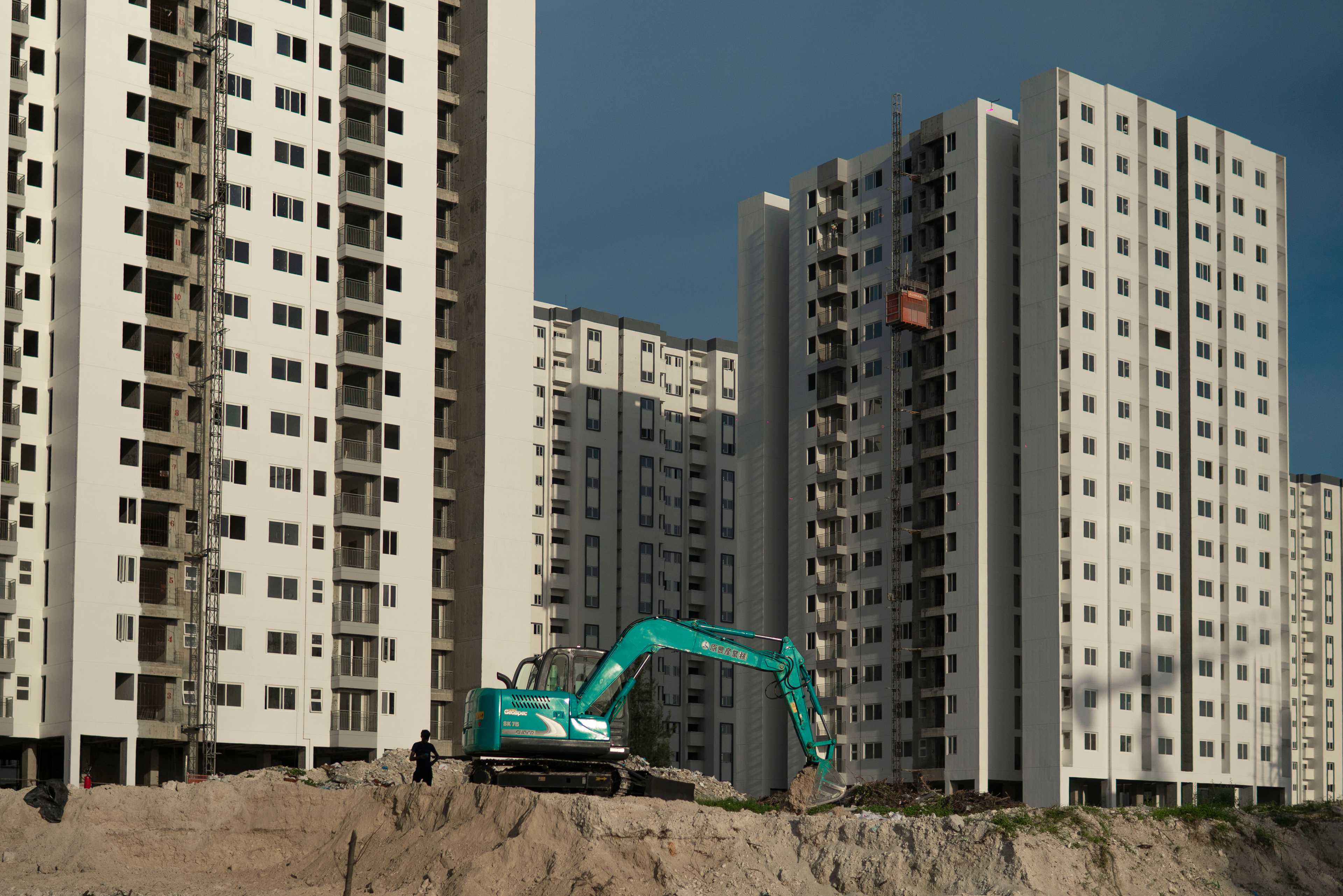
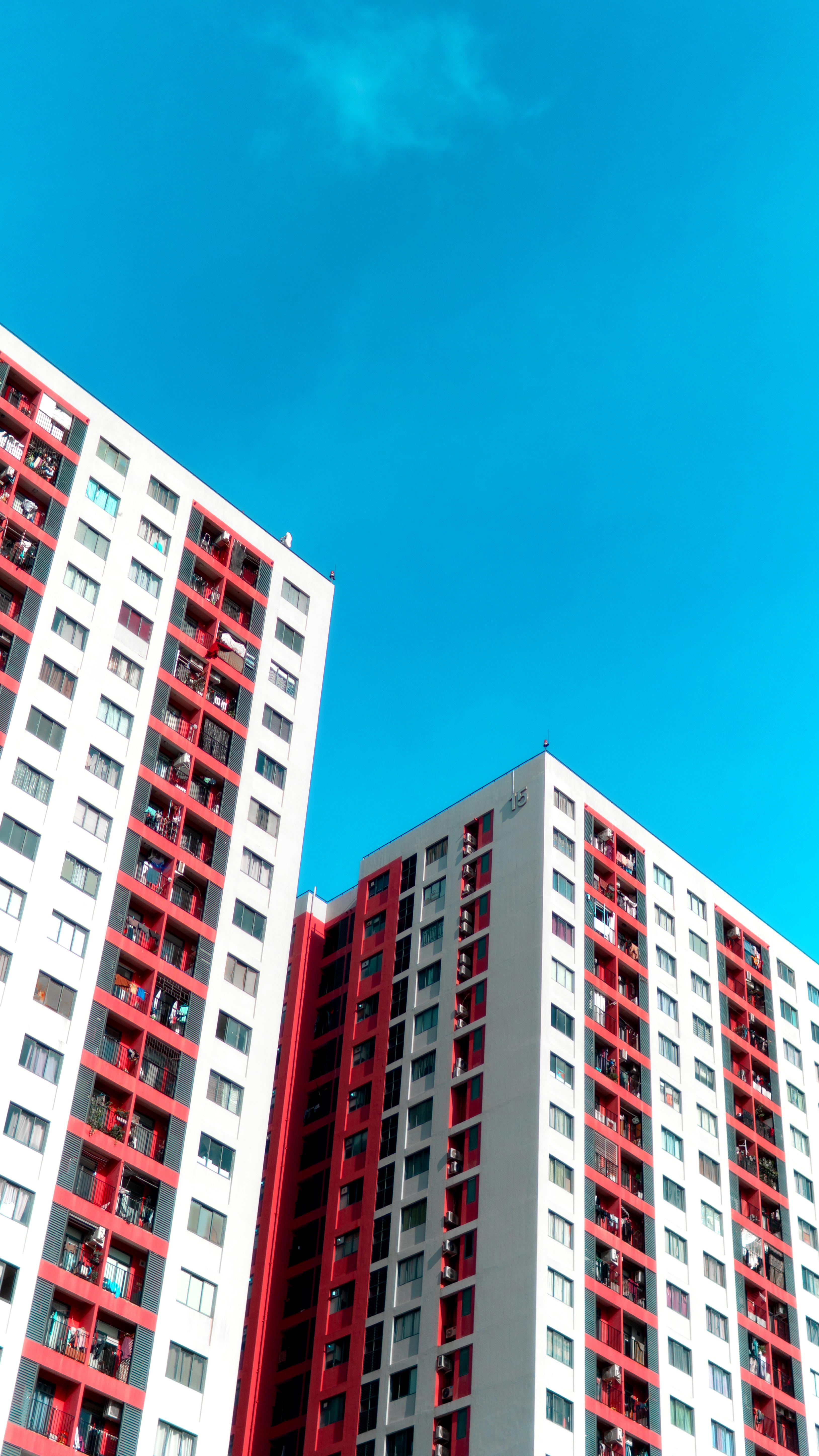
You see them before you arrive. Sixteen towers painted in bold red, orange, green, yellow, purple, and blue stripes, bright against the coastline, impossible to miss. Hiyaa is not just a housing project; it's a landmark. Not just because of its scale but because of what it represents: one of the most ambitious and contentious experiments in state-built housing the Maldives has ever seen.
.jpg&w=3840&q=75)

Ads By Maldives Assures Supply
Launched in 2017 to tackle the capital’s growing housing crisis, Hiyaa was meant to shift the equation. The model was rent-to-own: a flat, a future, and maybe, over 25 years of fixed monthly payments, a home you could one day call your own. At 7,000 units across 16 towers, it was the largest public housing development in the country’s history. For many, it was a lifeline. For others, it raised uncomfortable questions.
The truth is that the housing crisis in the Maldives isn’t just about supply; it’s about affordability, livability, and the challenge of building for everyone, not just anyone.
By 2019, over 74% of residents in Malé were renting, often in cramped, subdivided apartments. Owning a home, especially in Greater Malé, had become something only the wealthiest 20% could afford. The April 2020 Rental Survey by the National Bureau of Statistics, Ministry of National Planning, Housing and Infrastructure found that rent accounted for nearly a quarter of household expenditure, with three-bedroom apartments in Greater Male’ averaging MVR 19,000 a month. This itself highlights the significant disparity between market prices and public sector incomes, with 67.4% of civil servants earning less than MVR 10,000 per month in 2023.
Into this gap stepped the state, not for the first time, but on a far bigger scale. Hiyaa wasn’t just a project; it was a statement that housing would be a right, not a privilege, and that space could be promised, even if the land was limited.
But even promises come with caveats.
Structural ambition invited scrutiny early on. In a formal review, the Architecture Association of Maldives (AAM) raised a series of concerns that extended beyond aesthetics to safety. Railings in shared corridors were installed too low, making them unsafe for children to use. Window placements were flagged for potential fall risks. Fire safety infrastructure was either incomplete or entirely absent, with no smoke-resistant zones or clear plans for high-rise evacuation. Pipes were exposed and poorly aligned. Each tower, home to hundreds of residents, was equipped with just three elevators, raising concerns about daily congestion and access during emergencies.
Playgrounds were absent. Waste disposal systems were insufficient. For buildings designed to accommodate over 40,000 people, the basic conditions for comfort, safety, and functionality had not been met. AAM also questioned whether the development aligned with Hulhumalé’s planning standards, noting the lack of communal areas, security systems, and open space. The project met its spatial targets but fell short of the planning standards needed to support safety, community, and quality of life.
Alongside these structural issues, affordability placed pressure on residents from the start. Initial rents were set at MVR 7,500, with an additional MVR 1,000 in maintenance. For many of the families the flats were intended for, this was already a stretch. By 2022, the strain was evident. According to the World Bank, 37% of Hiyaa tenants were in arrears. Debt servicing costs had ballooned, prompting a reassessment of terms. In 2023, revised conditions reduced monthly rent to MVR 6,300 for the first seven years while maintaining the MVR 1,000 maintenance fee. The total payment period was also extended from 25 to 27 years in an effort to ease the financial burden.
Separately, the approach to eligibility also drew discussion. Rather than targeting individuals based on income, Hiyaa prioritized job categories, including civil servants, newlyweds, and nurses. There was equal access but not equitable access. Everyone paid the same rent, whether they could afford it or not.
And yet, Hiyaa was never going to be perfect. What it offered- a long-term, state-backed route to homeownership was still radical in a place where housing inequality runs deep. It surfaced all the hard questions: about how to build fairly, how to price human dignity, and when the state should intervene when the market cannot.

Ads By masonworks
In 2025, new legislation was introduced to course-correct: banning subleasing, limiting ownership transfers, and establishing a housing fund for those most at risk of being left behind. That same year, long-overdue infrastructure upgrades were also completed — including the installation of eight additional elevators across four Hiyaa towers, aimed at easing congestion and improving daily accessibility for residents. Fahi Dhiriulhun Corporation is now leading the next phase, with 13,000 more units planned across the Greater Malé Region. The scale is growing. So are the expectations.
Hiyaa did more than build homes. It built a mirror, held up to policy, politics, and the price of being left behind. It asked what it really means to give shelter: Is it enough to offer walls and windows, or must we also promise light, air, and dignity? That is the legacy it leaves us with. Not 16 towers against the sea, but the question of whether a nation built on sand and sea can afford to get housing wrong — and what happens when we do.
.jpg&w=3840&q=50)